The Elements

Experts have been sounding the alarm about smartphone use and its impact on young people’s mental health, but digital wellbeing tools haven’t evolved to meet the moment. As founding designer, I built The Elements around a simple but overlooked principle: sustainable change requires insight before action. expressed through a system blueprint and exploratory interface designs.
Role
Founding Designer
Category
Education, Lifestyle
Year
'23-25

The Problem
Young people struggle to recognise and respond to hidden digital risks that influence their mental health and development.

The Opportunity
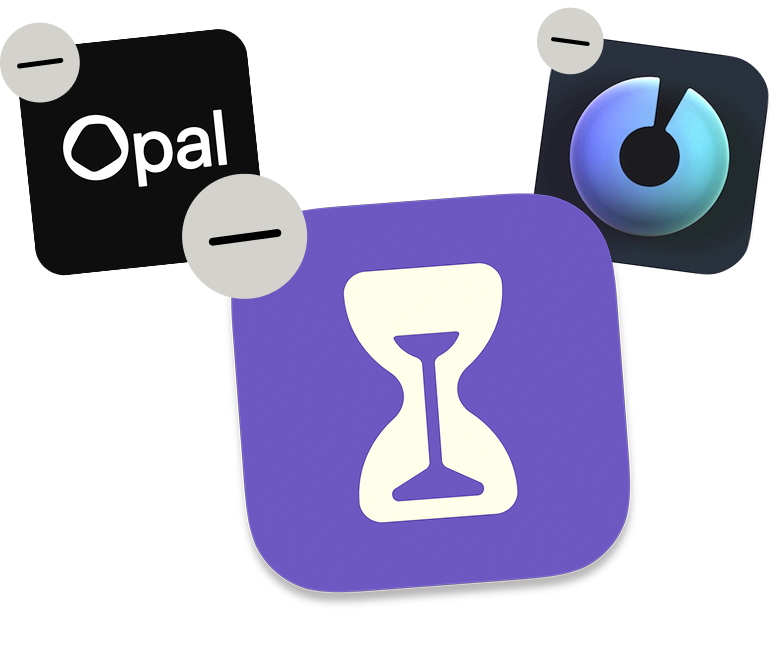
There are clear signs this group want to improve their relationship with technology, but existing tools fail to translate intent to sustained action.
Jump to the solution →

The Problem
Young people struggle to recognise and respond to hidden digital risks that influence their mental health and development.
What makes under-25s vulnerable?The Opportunity
There are clear signs this group want to improve their relationship with technology, but existing tools fail to translate intent to sustained action.
Why existing tools fall shortJump to the solution →
The Problem
Young people struggle to recognise and respond to hidden digital risks that influence their mental health and development.
.svg)

The Opportunity
There are clear signs this group want to improve their relationship with technology, but existing tools fail to translate intent to sustained action.


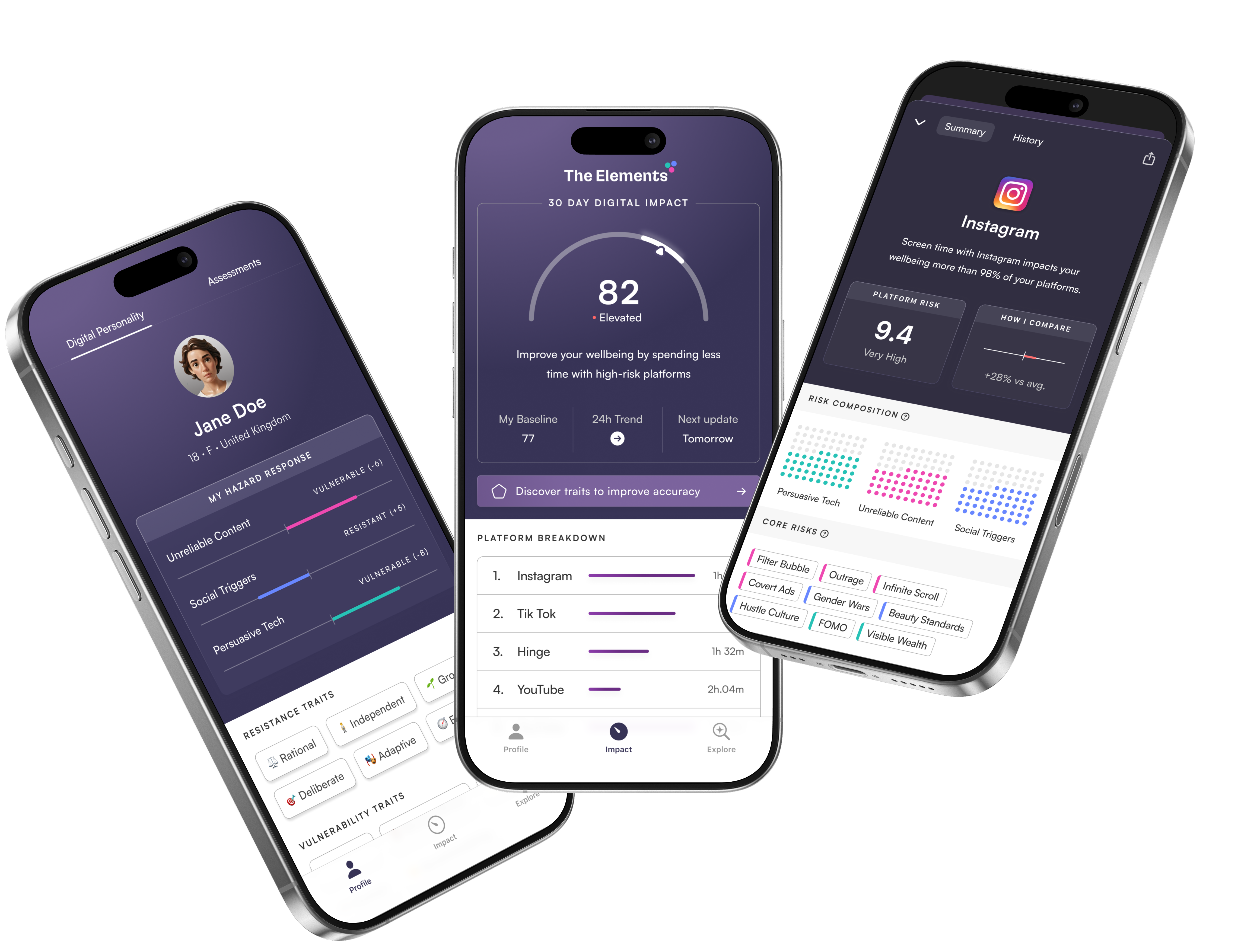
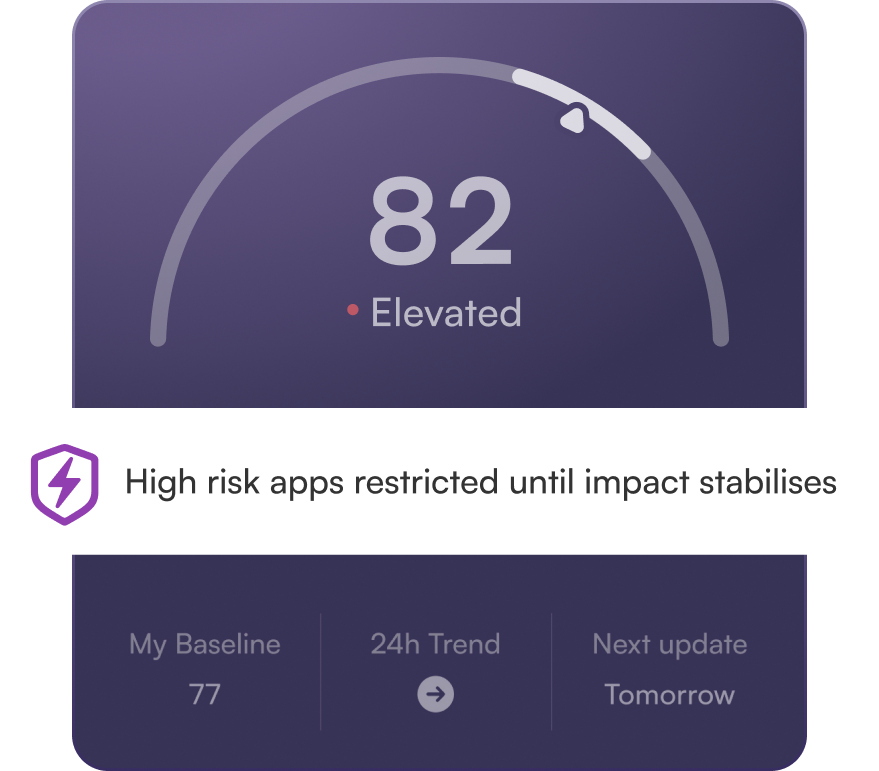
Helps young adults make sense of their personal digital risk.
SOLUTION
HERO FEATURE
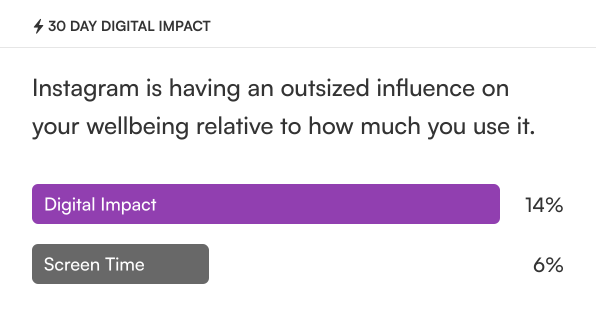
Digital Impact System
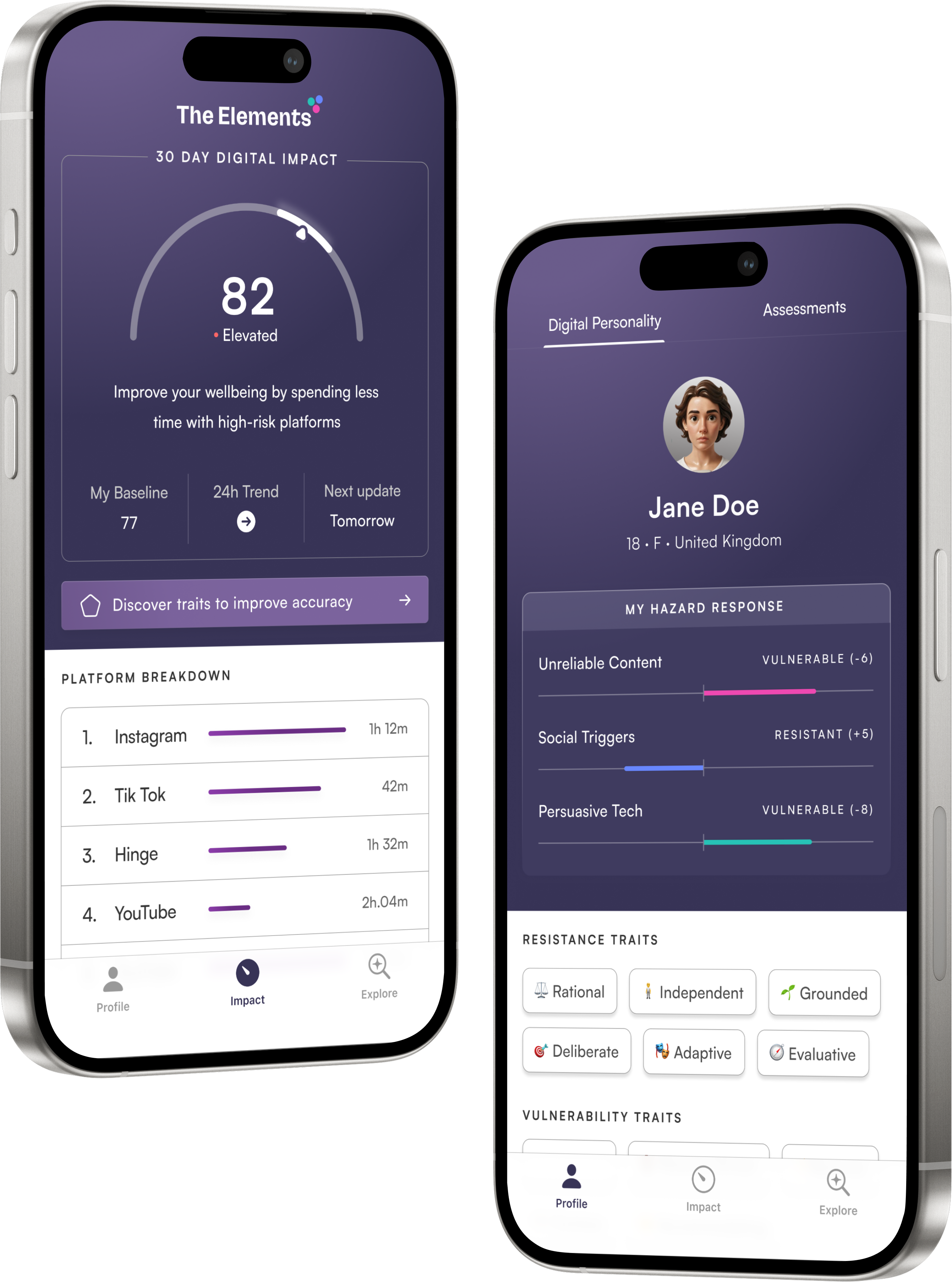
Shows how time spent with some platforms is more harmful than others.
TAXONOMY
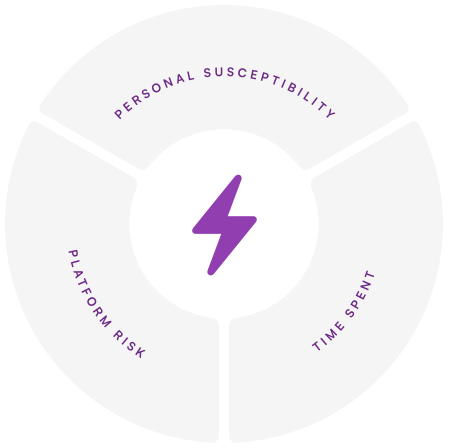
The '3 Elements' of digital risk
A framework that makes digital harm understandable and quantifiable for young adults.


PERSONALISATION LAYER
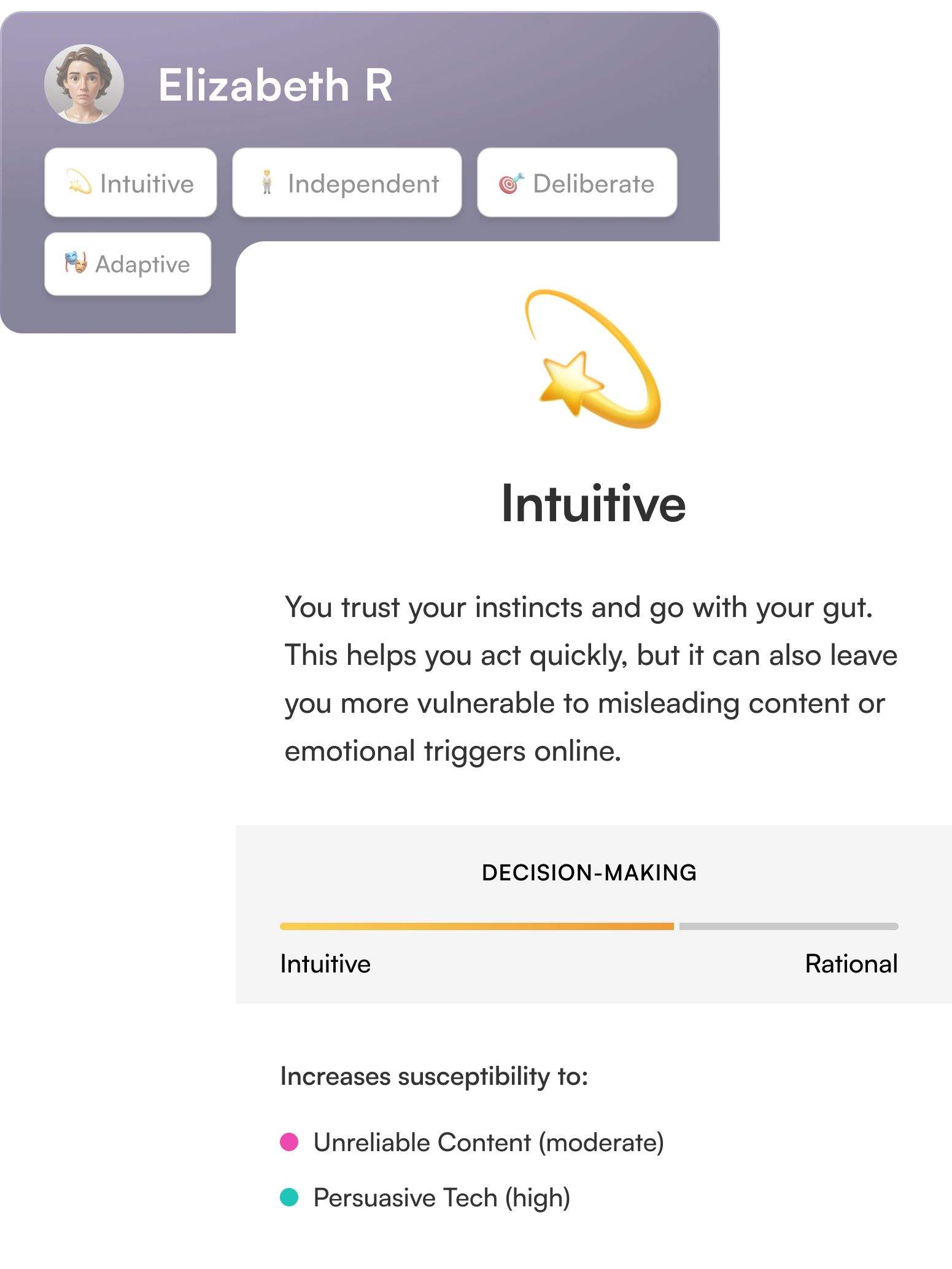
Trait-based impact modelling
Helps users understand why their experience might differ from others.
INTERVENTION LAYER
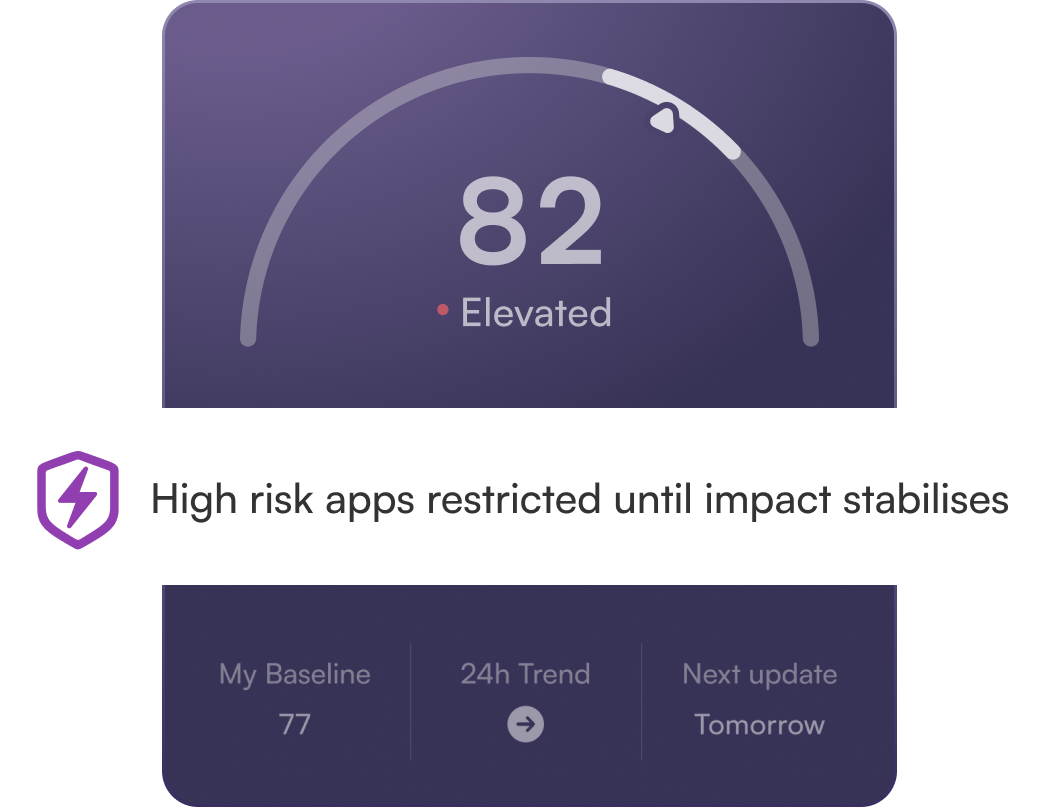
Smart Blocker
Creates a layer of friction for accessing high-risk content when impact gets too high.
PERSONALISATION LAYER
Trait-based impact modelling
Helps users understand why their experience might differ from others.
TAXONOMY
The '3 Elements' of digital risk
An audience-friendly framework that makes digital harm understandable and quantifyable.
INTERVENTION LAYER
Smart Blocker
Creates a layer of friction for accessing high-risk content when impact gets too high.
DESIGN RATIONALE
Each part of the user expeirnece was designed to balence product objectives, work cohesively in a system and deliver value/interest
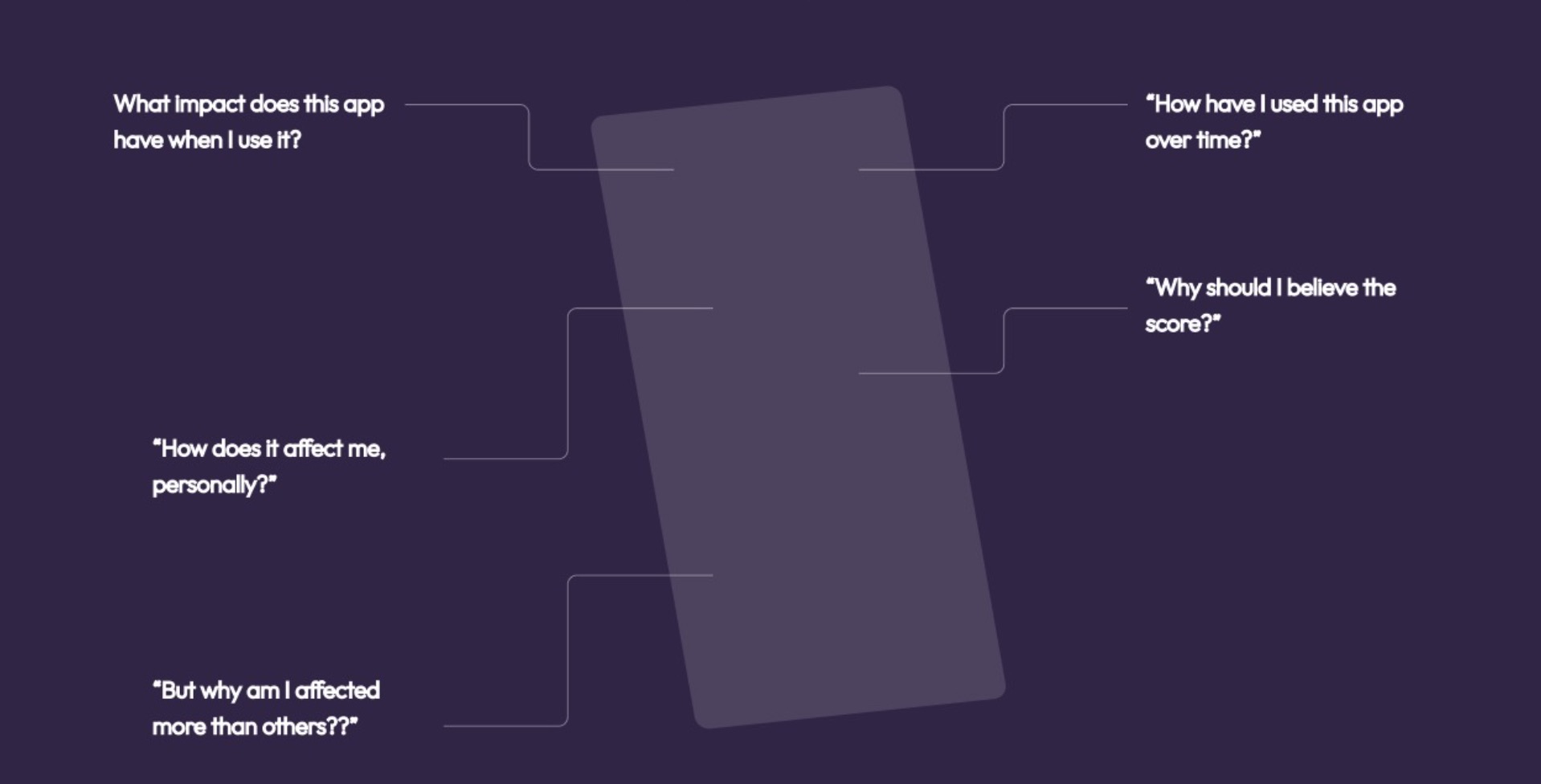
SYSTEM DESIGN
Digital Impact accounts for the risks we're exposed to, the way we interact, and the way we respond, making it more directional and interpretable than screen time alone.
PRODUCT STRATEGY
Most digital wellbeing tools prioritise control or engagement over understanding. By putting sense-making first, The Elements starts where the user actually is, not where it's easy to intervene.

Educates
Surfaces hidden digital risks in a way users can understand.

Motivates
Makes digital harm feel personal, relevant, and credible.

Empowers
Supports informed, low-friction change over time.
BEHAVIOURAL INSIGHT
USER APPEAL

USER VALIDATION
Given the product's high-concept nature, I took to the streets with (sketeches explaining the core idea)a prototype to check that the idea+execution (concept?) resonated with users, and that the fundamentals of the model were appealing and comprehensible to my target audience.

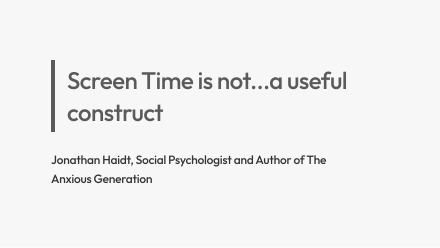
Research showed that many young people rely on screen time as their mental model for digital wellbeing, even though it reveals little about the emotional and psychological impact of what they see. Many also underestimate their own susceptibility, which makes it harder to recognise when content is affecting them.

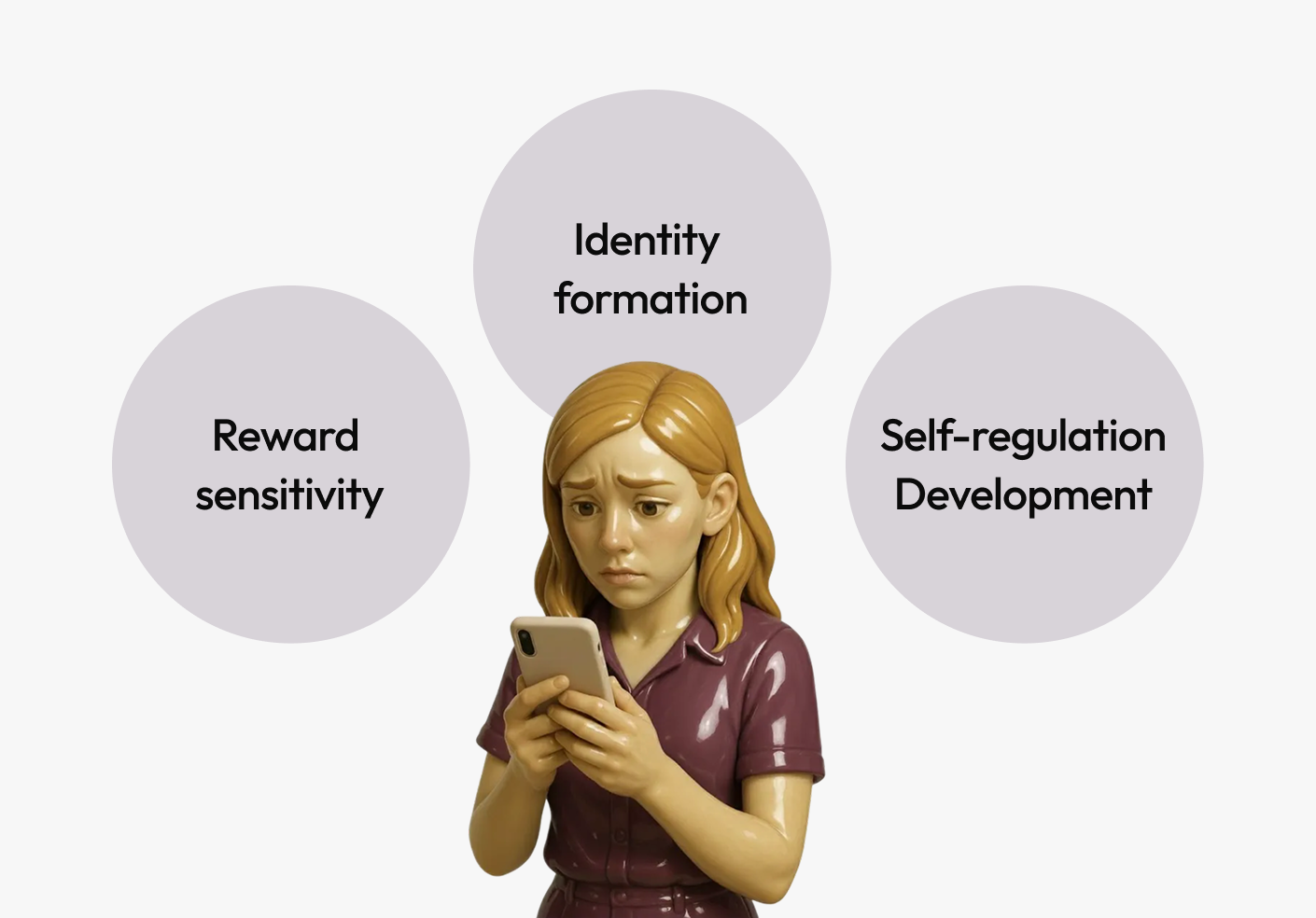
Under-25s are more affected by digital environments because they’re still developing socially, emotionally and cognitively.
Identity formation: heightens sensitivity to social comparison and the need for belonging.
Reward sensitivity: increases responsiveness to novelty, feedback and reinforcement.
Self-regulation development: makes filtering and contextualising digital content more difficult.
This case study isn’t yet optimised for mobile.
Please view it on a desktop browser. 🙏