
Product Designer | 2022
When Beams’ Focus Mode underperformed, I defined a more effective approach by expanding the team’s view of how focus works in practice. expressed through a system blueprint and exploratory interface designs.
Role
Strategy & Discovery
Team
Me, Founders (Product/Engineering)
Me, Founders (CTO/PM)
Year
2022


1

2

3

1
2
3
A new model for focus

Established frameworks helped demonstrate why we should broaden our framing of the problem

Benchmarking revealed which focus solution areas were saturated and which were underserved.

Reviewing the Product
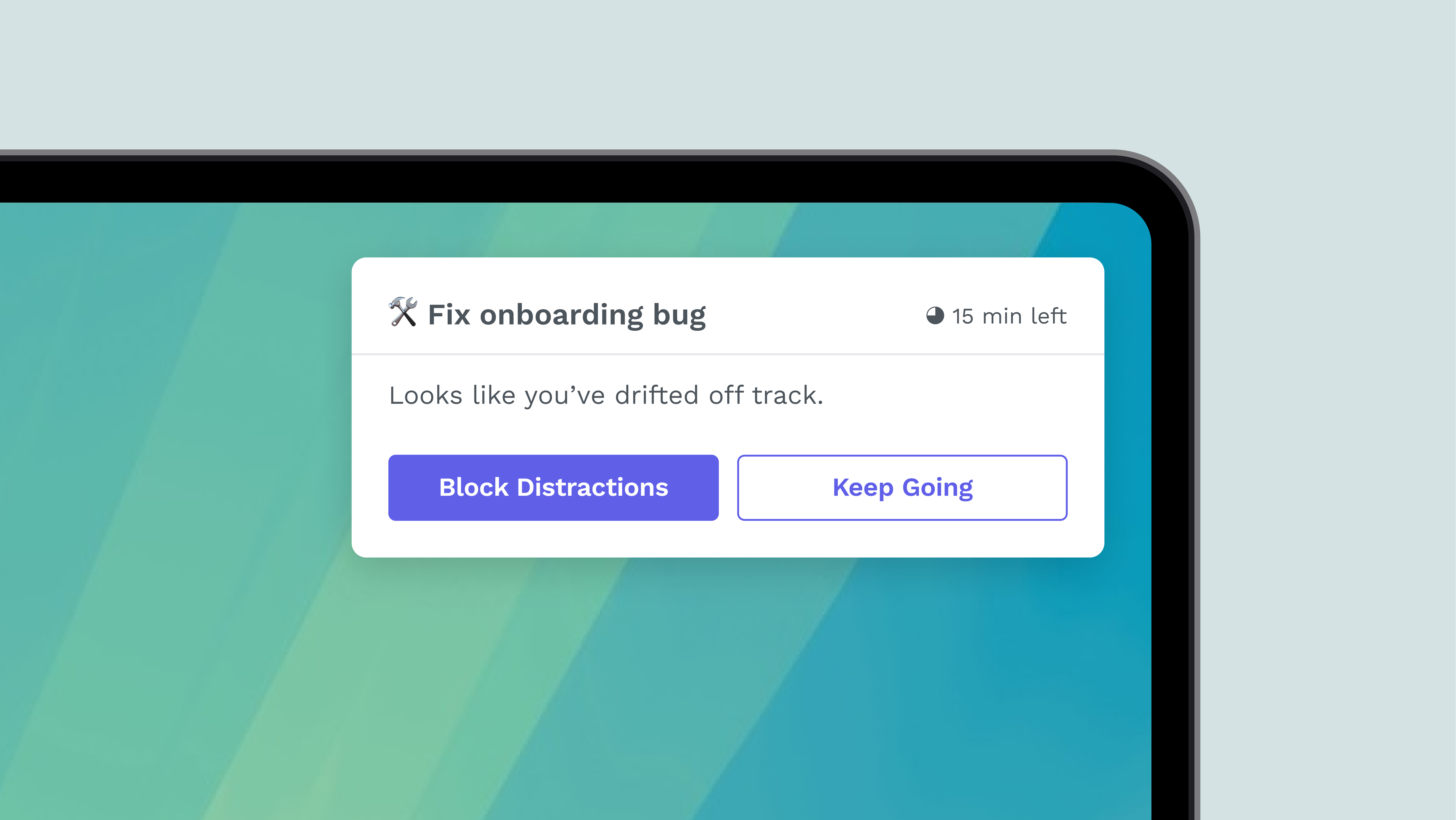
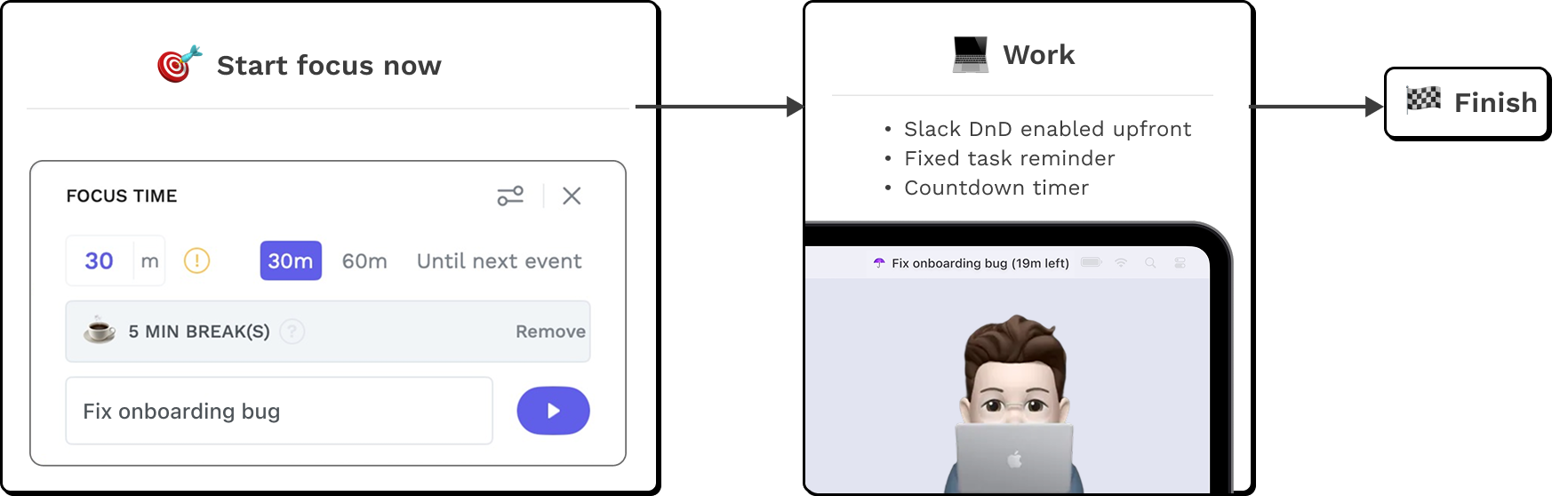
Product Audit: The MVP treated Focus as something to be set upfront and maintained. But limited environmental controls and flexibility comprimised the user experience.
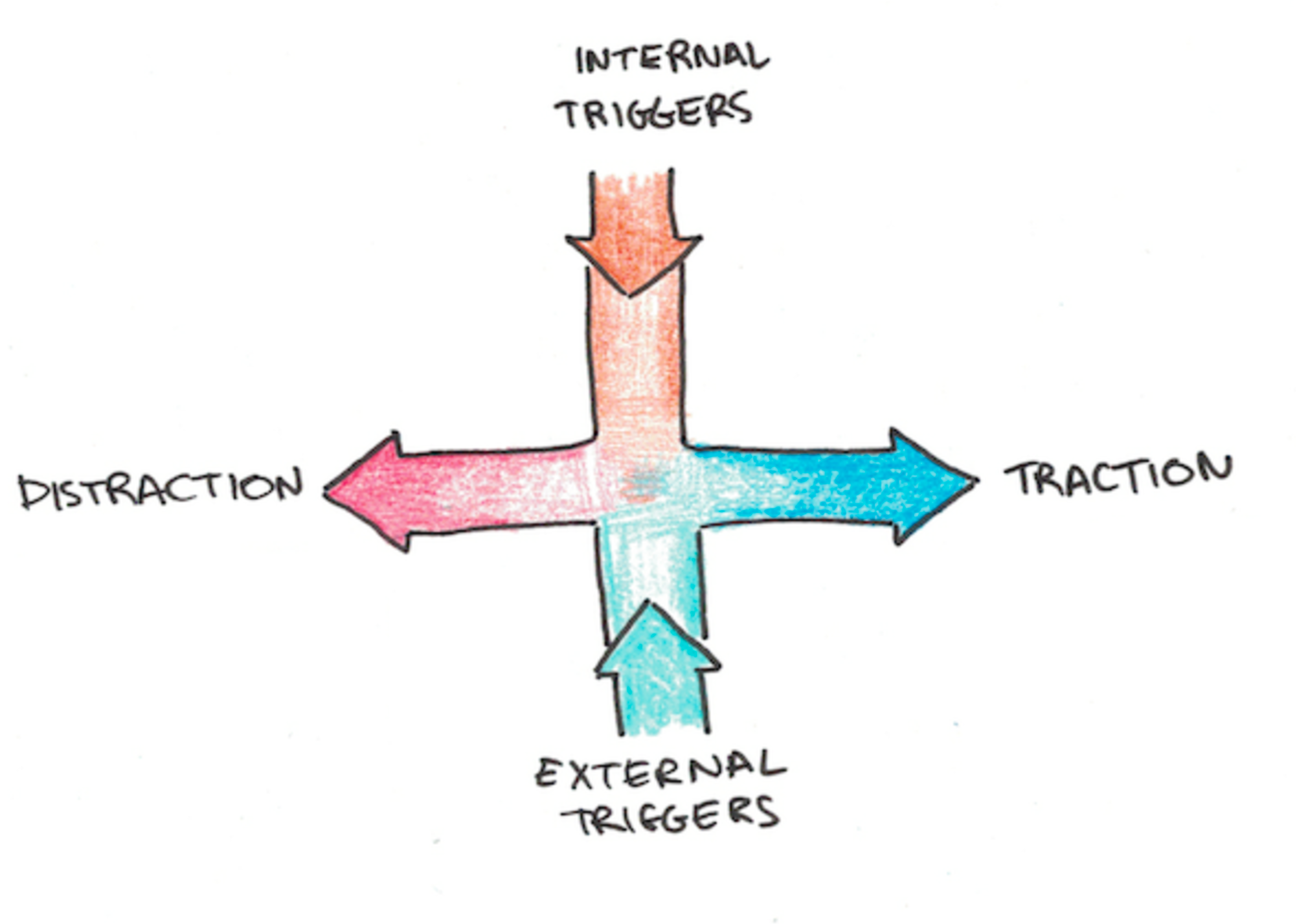
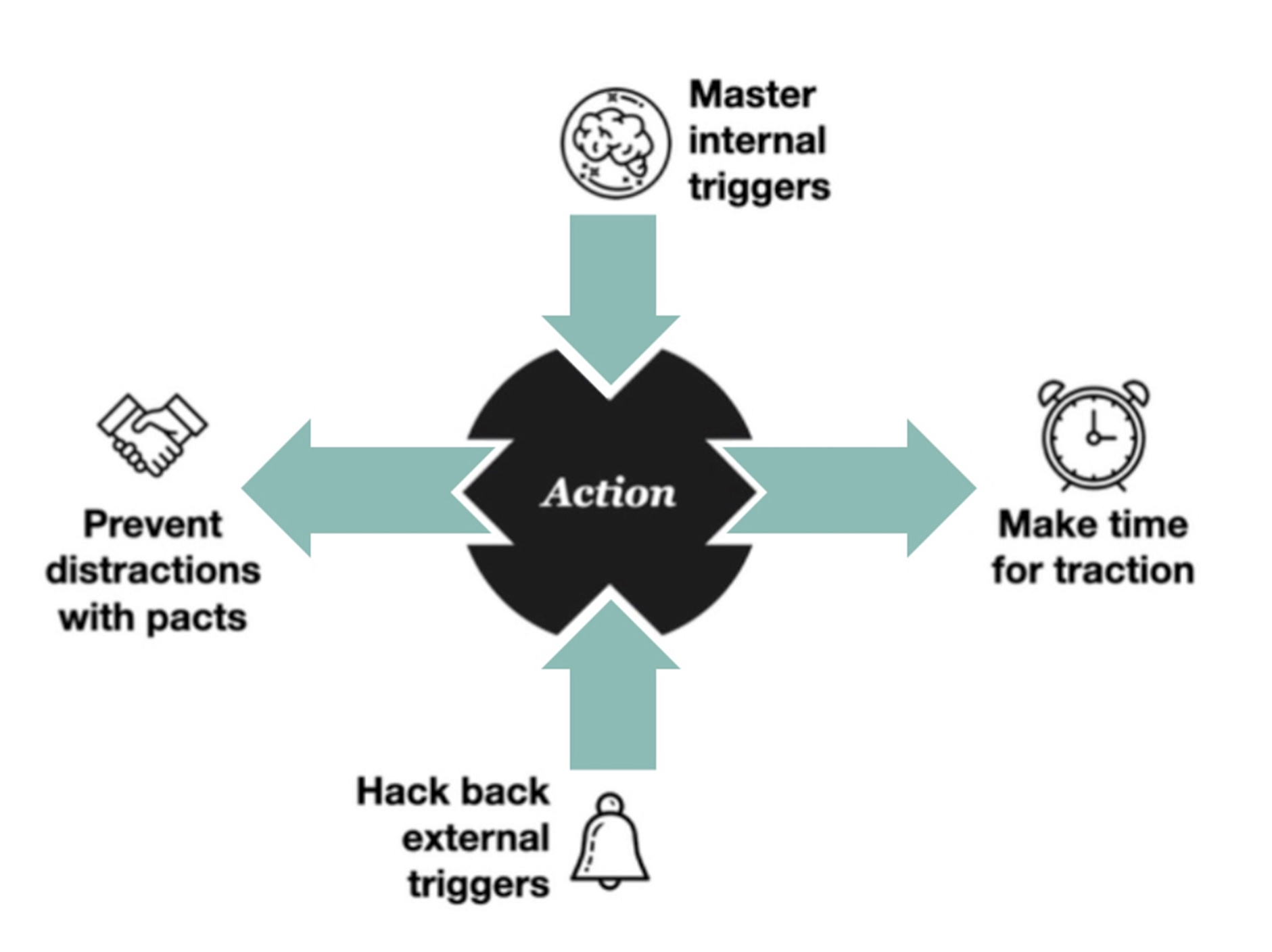
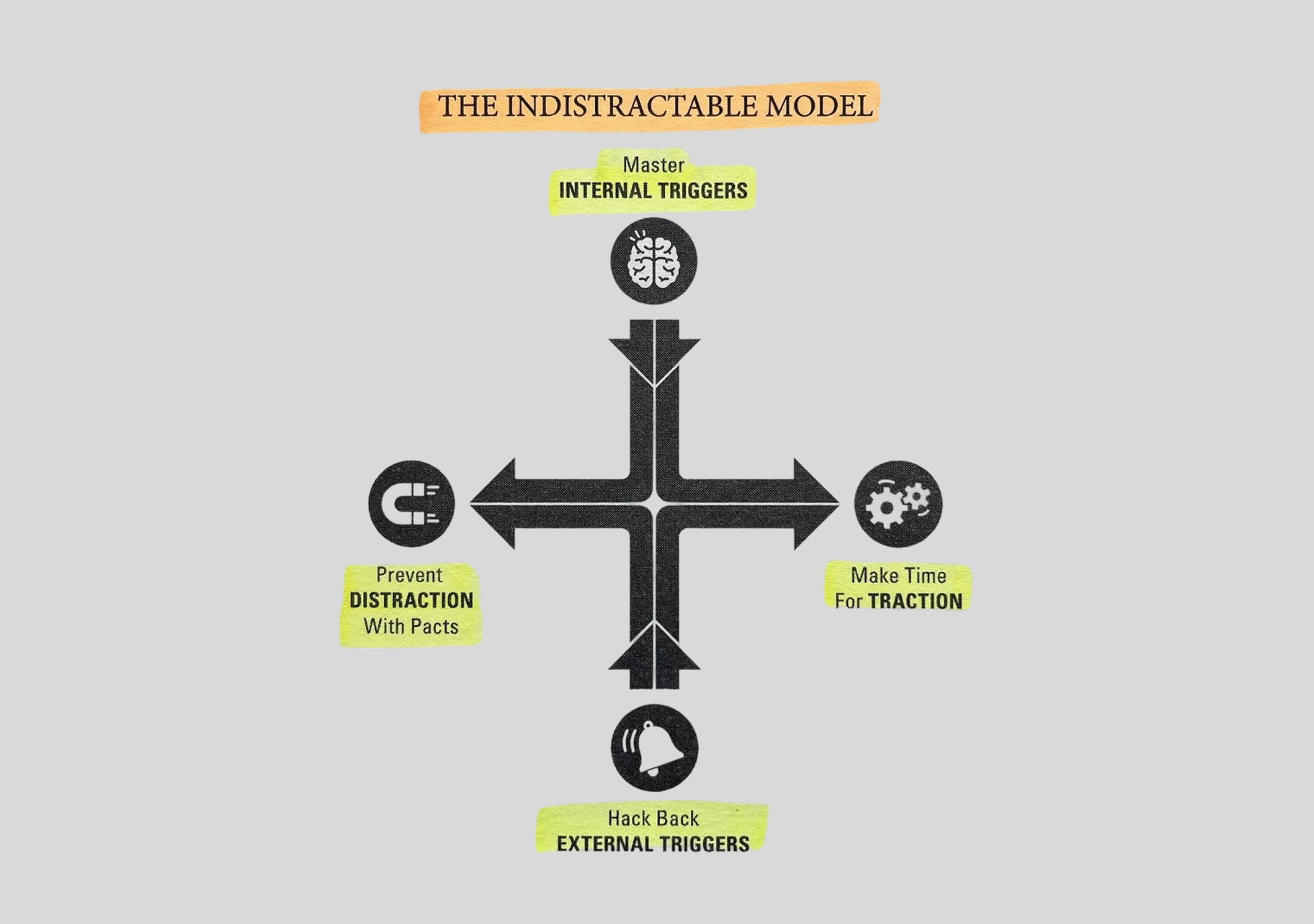
Behavioural Research: frameworks show that distraction arises both from within and without, and is best managed through complementary strategies.
PROCESS 1/3
My Process
Comparing new approaches to supporting focus
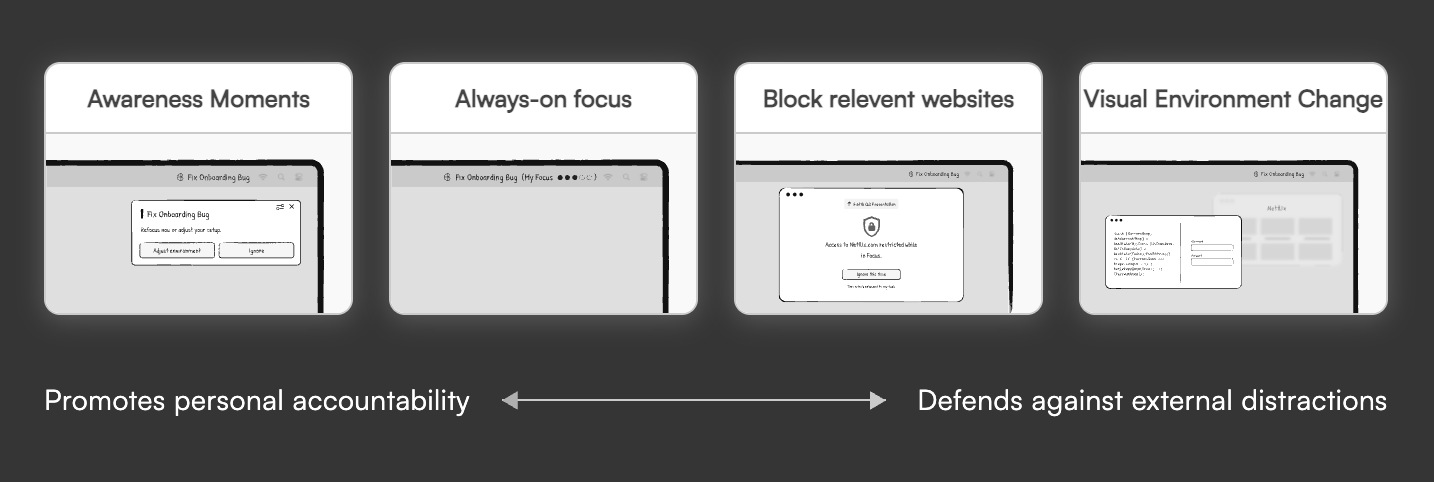
To explore what effective support might look like, I developed and tested four behaviourally informed concepts. Each introduced different ways of helping users stay aligned with their task. These were assessed in terms of perceived usefulness, value, and intrusiveness.
Key finding:
Concepts that surfaced attention drift were seen as more differentiated and worth paying for, while external distraction controls felt familiar and less compelling.

3 research artifacts available on desktop
%201.svg)
Focus Mode's design suggested a narrow framing of the problem - treating distraciton as something external, to be managed by controlling the environment.

To better understand focus and distraction, I turned to behavioural frameworks. In Indistractable, Nir Eyal writes:
While we love to blame external triggers...most of our distractions begin from within
This reinforced my suspicion that we were conceiving the problem too narrowly and provided inspiration for concept testing.

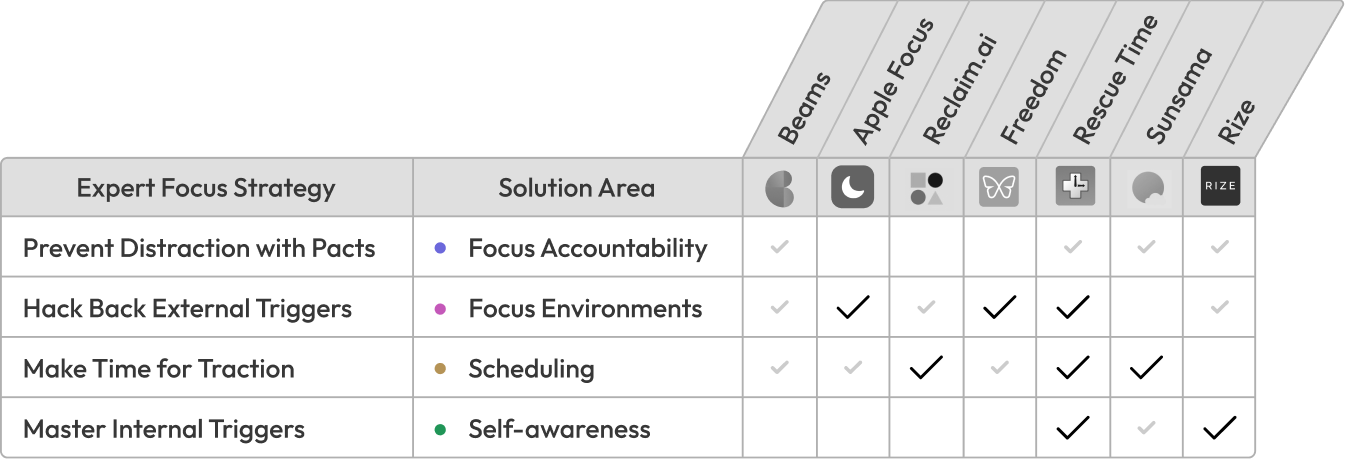
This misalignment wasn't just theoretical, it was reflected in the tools available.
Established frameworks helped demonstrate why we should broaden our framing of the problem
Benchmarking revealed which focus solution areas were saturated and which were underserved.
Awareness Moments
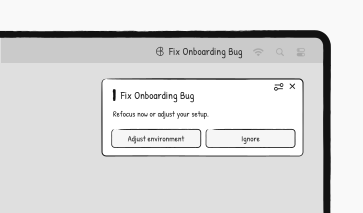
Always-on focus
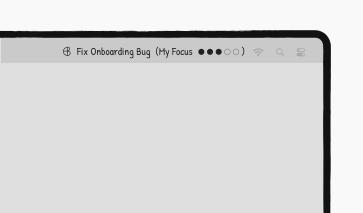
Block relevent websites

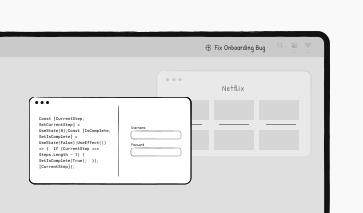
Visual Environment Change
Promotes personal accountability


Defends against external distractions
Awareness Moments
Always-on focus
Block relevent websites
Visual Change
Promotes personal accountability
Defends against external distractions
PROCESS 2/3
Developing a product direction that helps users stay aligned with their task when attention slips.
Building on these findings, I reimagined Focus Mode as a system that supports users throughout the workflow, helping them stay aligned with their intent by monitoring behaviour and intervening when attention drifts.

Realises the potential of the original concept
Builds on the startup's early ideas around intention-setting and external distraction surpression.
Addresses a gap in existing focus tools
Most focus tools address external distractions, leaving internally driven focus breakdowns unaddressed.
Behaviourally-aligned
Escalates support only when needed rather than defaulting to restriction.
Adaptive Focus Blueprint
Adaptive Focus Blueprint
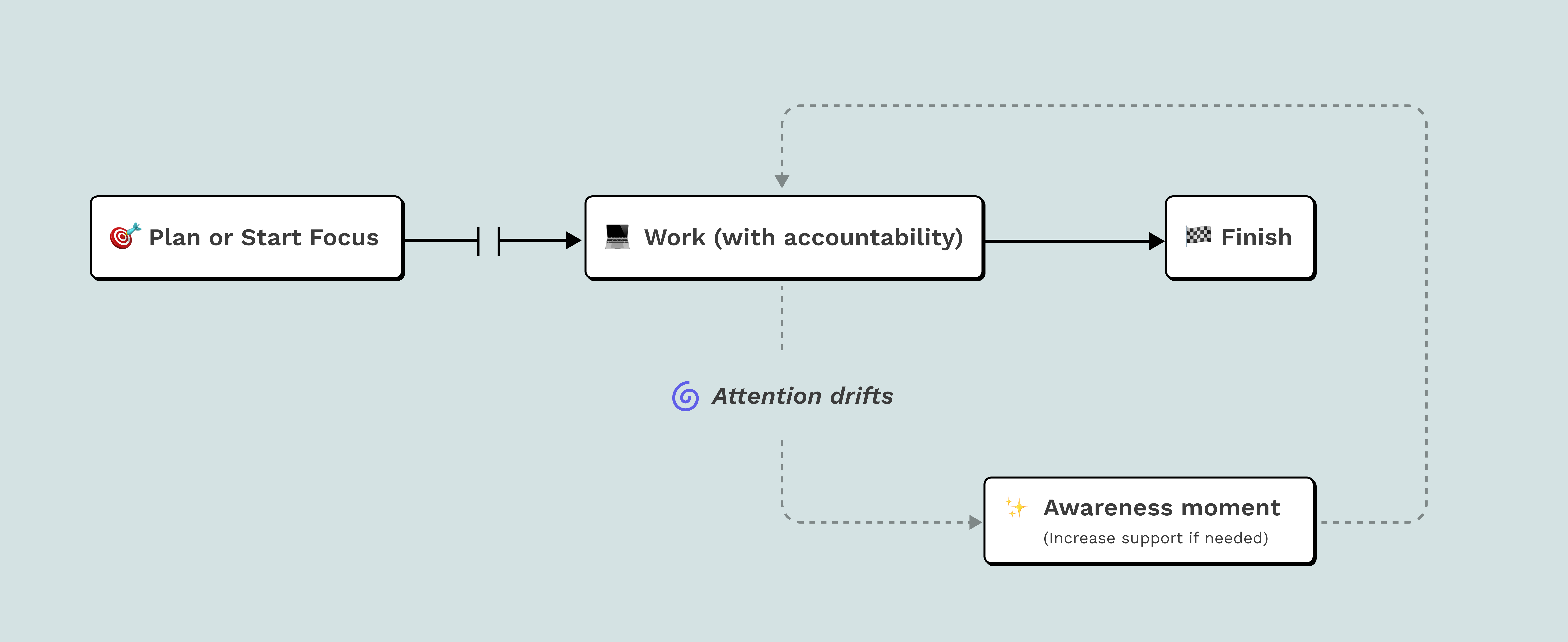
The system supports users when attention drifts, escalating restriction if drift continues.
.png)
1. Define intent upfront
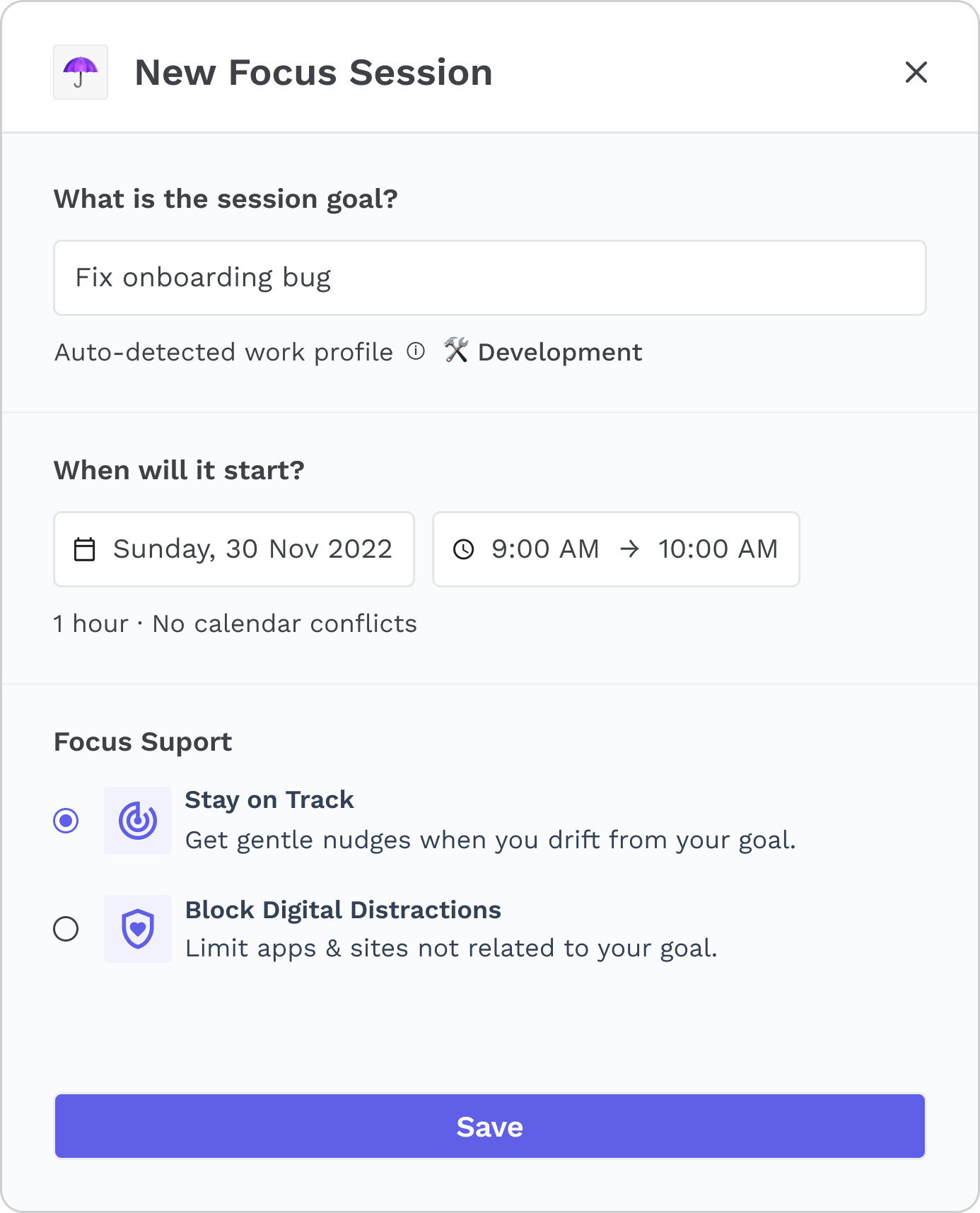
Users define their intent upfront, allowing the system to assess behaviour against it.
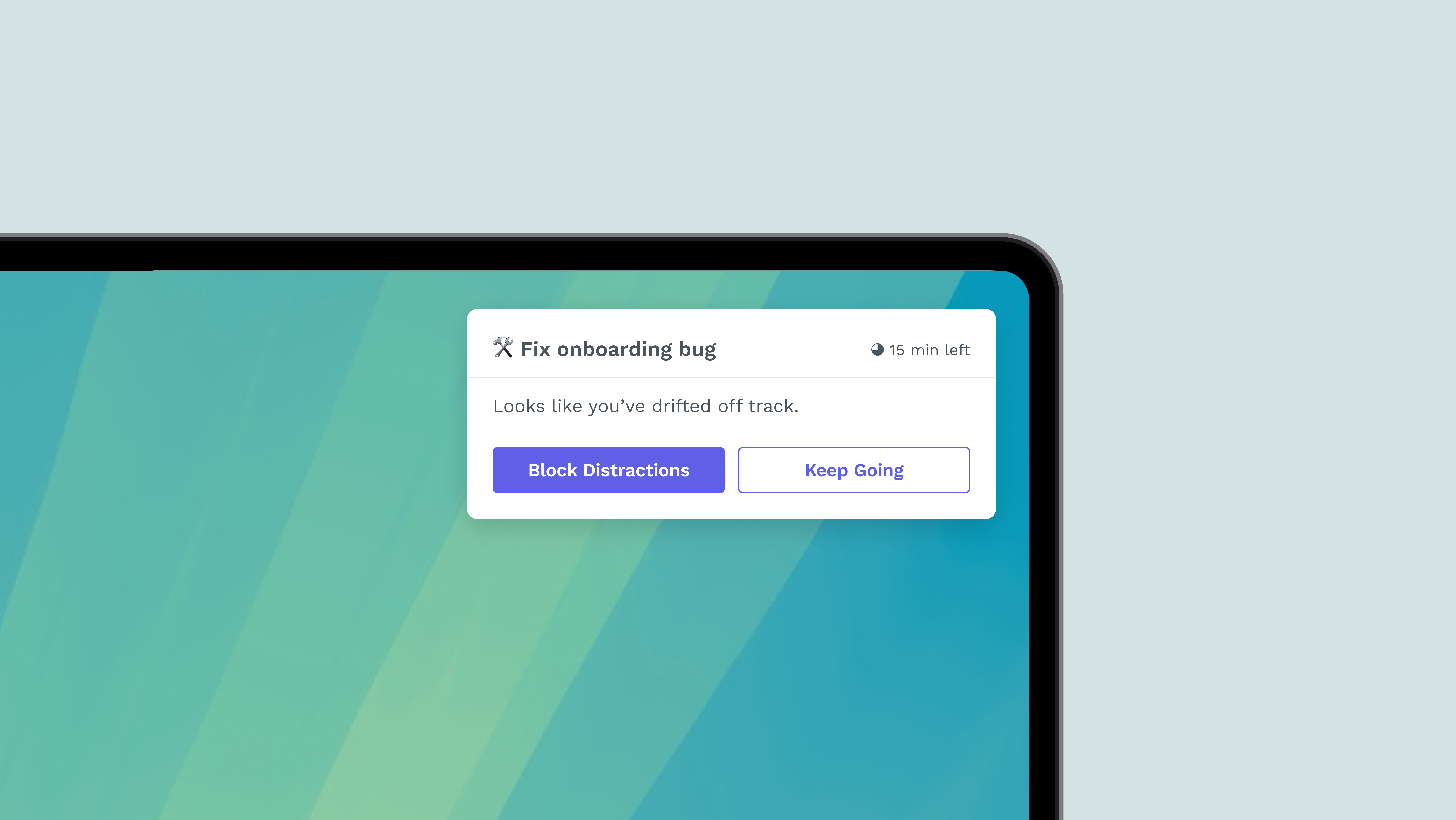
2. Intervene when attentinon drifts
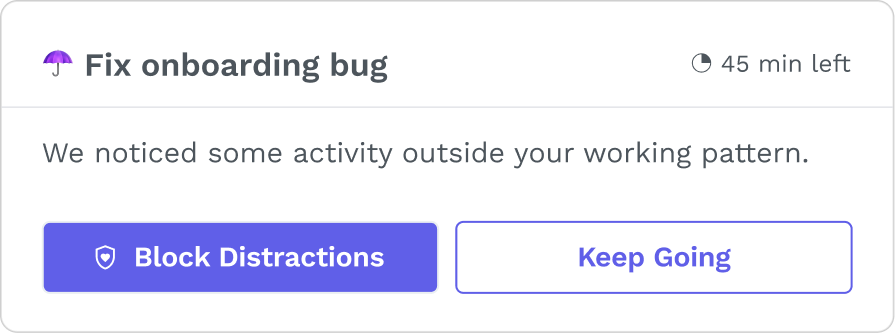
Timely interventions help users realign.
PROCESS 2/3
Handoff
When the team paused product discovery due to changing priorities, I handed off a system blueprint, UI mockups, feasibility assessment, and validation roadmap — enabling a return to this direction when ready.

Signal quality
Even when distraction is present, prompts may feel disruptive or punishing.
Privacy
Monitoring application and window behaviour may feel invasive to some users.

PROCESS 2/3
Handoff
Due to wider company priorities, the team chose to pause product discovery and launch the existing product as an open beta. I handed off a system blueprint, feasibility assessment, and validation roadmap — enabling the team to return to this direction when ready.

Signal quality (low–moderate risk)
Even when distraction is present, prompts may feel disruptive or punishing.
Privacy (moderate risk)
Monitoring application and window focus may feel invasive to some users. Clear opt-in, transparency, and local processing would be essential.

The 6 Focus Concepts
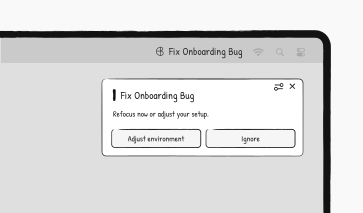
Focus-Drift Prompts
Beams recognises when your attention drifts from your intended task and nudges you back on track.

Accountability
Smart Blocking
Apps and websites that are not helpful to your task are blocked.
Accountability

Background Monitor
See how closely your behaviour matches your intended task (always-on).
Accountability
Visual Environment Change
Apps and websites that are not helpful to your task are desaturated or blurred.
Accountability
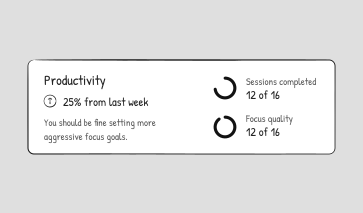
Session Reports
Analytics show how you've spent your focus time and offer goals and tips.
Accountability

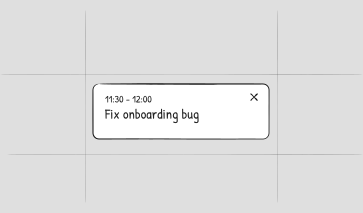
Timeboxed Focus
Plan focus sessions in advance. Smart reorganisation adapts to conflicts.
Accountability

Focus-Drift Prompts
Beams recognises when your attention drifts from your intended task and nudges you back on track.
Accountability
Smart Blocking
Apps and websites that are not helpful to your task are blocked.
Accountability
Background Monitor
See how closely your behaviour matches your intended task (always-on).
Accountability
Visual Environment Change
Apps and websites that are not helpful to your task are desaturated or blurred.
Accountability
Session Reports
Analytics show how you've spent your focus time and offer goals and tips.
Accountability
Timeboxed Focus
Plan focus sessions in advance. Smart reorganisation adapts to conflicts.
Accountability
Focus-Drift Prompts
Beams recognises when your attention drifts from your intended task and nudges you back on track.
Accountability

Accountability
Focus Environments
Self-awareness

Scheduling
Accountability

Focus Environments
Self-awareness
Scheduling
Smart Blocking

Visual Environment Change
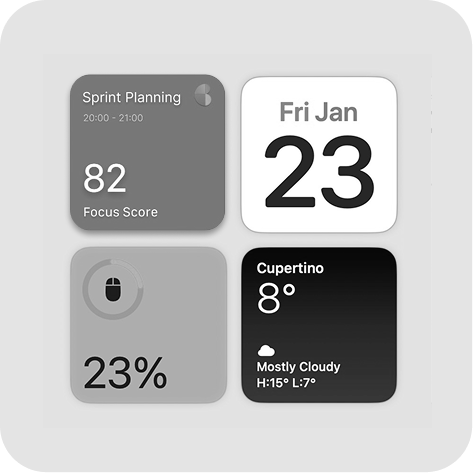
Background Monitor
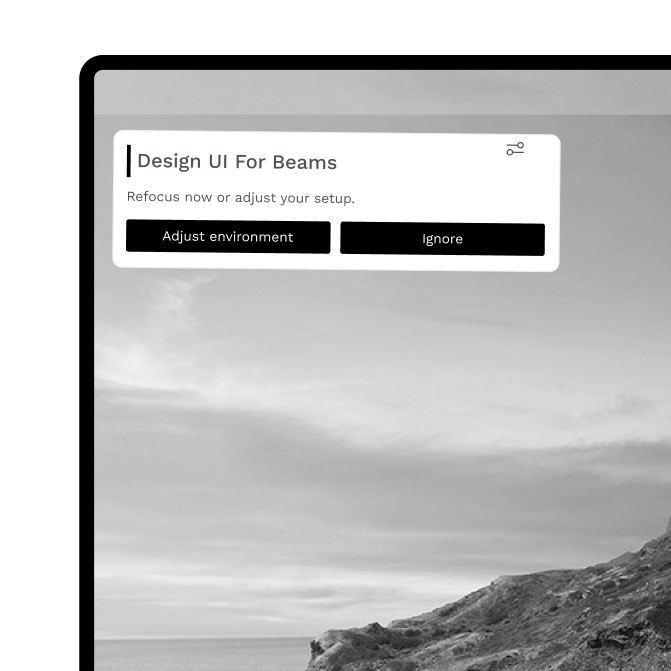
Accountability Prompts
Timeboxed Focus
Session Reports
Focus-Drift Prompts
Beams recognises when attention drifts from intended task and nudges you back on track.
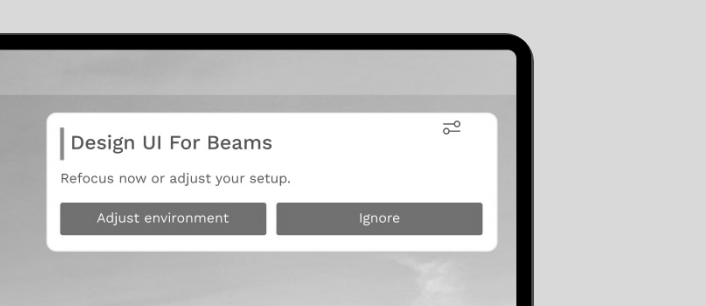
Visual Environment Change
Apps and websites that are not helpful to your task are desaturated or blurred
Session Reports
Analytics show how you've spent your focus time and offer goals and tips.
Smart Blocking
Apps and websites that are not helpful to your task are blocked.
Timeboxed Focus
Plan focus sessions in advance. Smart reorganisation adapts to conflicts.
Background Monitor
Widget shows how closely your behaviour matches intended task.
Key learnings

Accountability emerged as the best opportunity for differentiation.
Focus Environments were seen as powerful but restrictive.
Self-awareness generated limited engagement.
Scheduling was a baseline expectation.
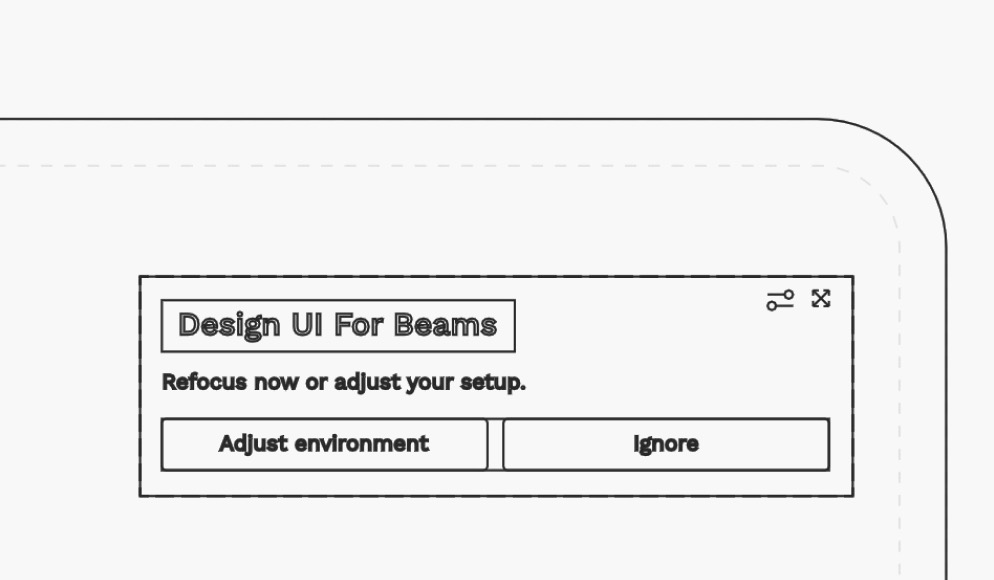
Focus-Drift Prompts
Beams recognises when your attention drifts from your intended task and nudges you back on track.
Accountability
Focus-Drift Prompts
Beams recognises when your attention drifts from your intended task and nudges you back on track.
Accountability
Focus-Drift Prompts
Beams recognises when your attention drifts from your intended task and nudges you back on track.
Accountability
Learnings

User value came from tackling harder problems
Meaningful differentiation required addressing deeper, less obvious focus challenges.

Presenting solutions revealed latent user needs
Task accountability was never requested, but its value was recognised when shown.

Evidence aligns teams faster than debate
Testing hypotheses built shared confidence and trust across the team.
PROCESS 2/3
PROCESS 2/3
Outcome & Reflection
Ultimately, the team pivoted to an entirely different direction, moving away from behavioral focus support and mindful producitvity altogether.
However, the market opportunity for differentiated focus tools is significant, and this direction warrants revisiting. AI capabilities now make it more viable than ever.
Handoff
I handed off the system blueprint, feasibility analysis, and validation roadmap - equipping the team with everything needed to move forward.
🧠 How attention drift is detected
When a user starts a focus session, they select a work profile that defines expected behaviour. If activity consistently falls outside the expected pattern, it flags this as attention drift and triggers a notification. Over time, the model adapts, learning what focused work looks like for each user and task type.
⚖️ Feasibility & Risks
Signal quality (low–moderate risk)
The system depends on reliably detecting attention drift from application and window focus patterns. Even when technically accurate, prompts that appear at the wrong moment may feel disruptive or punishing.
User acceptance / privacy (moderate risk)
Monitoring application and window focus may feel invasive to some users. Clear opt-in, transparency, and local processing would be essential.
🧭 Proposed next steps
Awareness Moments
Personal Accountability
Beams recognises when your attention drifts from your intended task and nudges you back on track
This would be a game-changer if it worked correctly
I assumed this wasn’t possible!
It might be a fine line between helpful and annoying...
Awareness Moments
Personal Accountability
Beams recognises when your attention drifts from your intended task and nudges you back on track
Awareness Moments
Personal Accountability
Beams recognises when your attention drifts from your intended task and nudges you back on track
QUOTES
This would be a game-changer if it worked correctly
It might be a fine line between very helpful and annoying
PROCESS 1/3
My Process
Reframing the problem
Beams' goal was to help users focus and reduce context switching. But despite positive feedback during the closed beta, its core feature — Focus Mode — saw less than 10% repeat usage.
To the team, this looked like a usability issue. I suspected it was more fundamental. The product treated focus as something that could be set once upfront and maintained by controlling the environment - without accounting for how attention can drift during work. Rather than refining this approach, I proposed exploring alternative paths forward.

Focus Mode's design suggested a narrow framing of the problem - treating distraciton as something external, to be managed by controlling the environment.
On the surface, focus mode covered the problem space. In practice it relied on a flawed assumption.

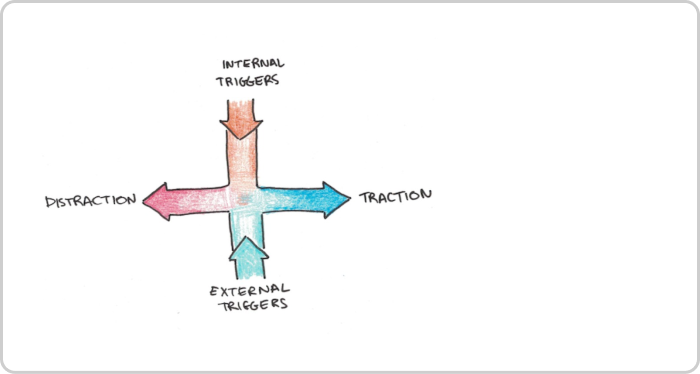
To better understand focus and distraction, I turned to behavioural frameworks. In Indistractable, Nir Eyal writes:
"While we love to blame external triggers...most of our distractions begin from within"
This reinforced my suspicion that we were conceiving the problem too narrowly and provided inspiration for concept testing.
This misalignment wasn't just theoretical, it was reflected in the tools available.
3 research artifacts available on desktop
Analysing the beta product
→

Behavioural framework
→
Competitor Landscape
→
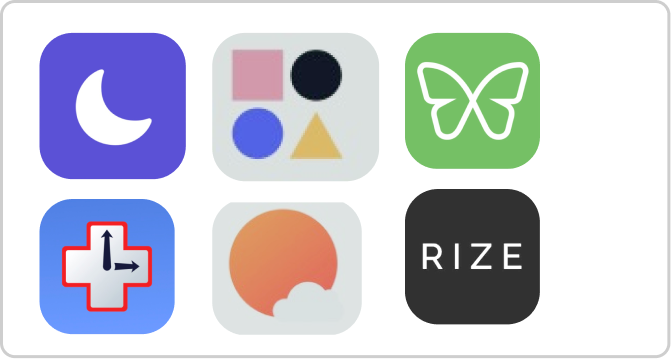
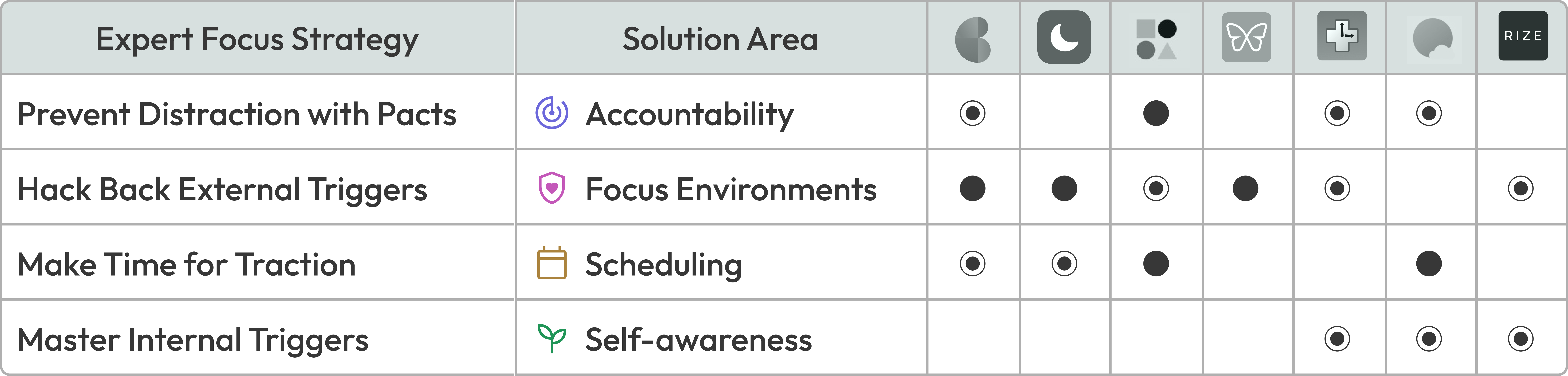
Benchmarking revealed which focus solution areas were saturated and which were underserved.
"
Most distraction doesn’t originate from outside of us... most distraction starts from within.
Established frameworks helped dmonstrate why we should broaden our understanding of the problem

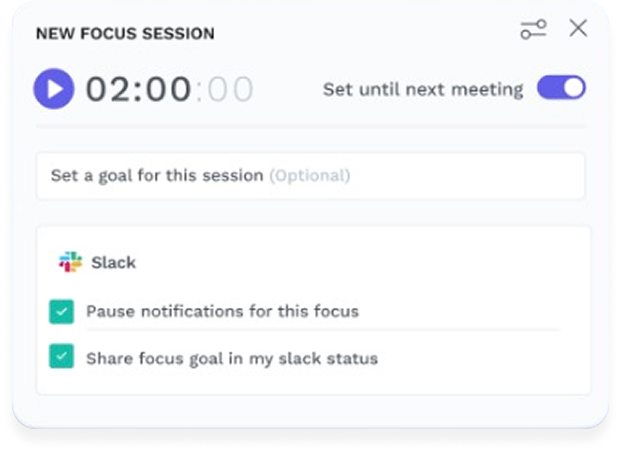
Focus Mode 1.0 attempted this by combining timers, intention setting and Do Not Disturb functionality.
Established frameworks helped demonstrate why we should broaden our framing of the problem
Benchmarking revealed which focus solution areas were saturated and which were underserved.


PROCESS 1/3
My Process
Why Focus Mode Failed
I argued that the core idea — helping users commit to a single task — set the product apart and was worth building on. The problem lay in how focus was supported once a task was defined.
Investigation included Product audit, behavioural research, competitor review
3 research artifacts available on desktop
Focus Mode's design suggested a narrow framing of the problem - treating distraciton as something external, to be managed by controlling the environment.
To better understand focus and distraction, I turned to behavioural frameworks. In Indistractable, Nir Eyal writes:
While we love to blame external triggers...most of our distractions begin from within
This reinforced my suspicion that we were conceiving the problem too narrowly and provided inspiration for concept testing.
This misalignment wasn't just theoretical, it was reflected in the tools available.